Pest control demand changes throughout the year. Calls often rise in warm months, then drop when fewer people see ants, mosquitoes, or other pests.
A slow season doesn’t end the need. Homes and businesses still need checks, prevention, and help with indoor pests.
These 9 pest control marketing ideas can help you get more bookings during slower months.
1. Use local search data to choose seasonal services
Recent home services data shows that 75% of pest control customers search online before choosing a service. Search data can help you reach that demand before the customer calls another company.
Check which pest problems people search for each month. Use Google Ads search terms, Google Trends, Search Console, and past lead records. Use this research to guide your keyword targeting, service areas, and campaign priorities.
Spend more on pests that stay active in the slow season, such as rodents, roaches, termites, bed bugs, or spiders.
Review at least 12 months of data when you’ve got it. Compare:
- Search volume for each pest
- Cost per qualified lead
- Booking and sales rates
- Demand in each service area
- Lead quality for homes and businesses
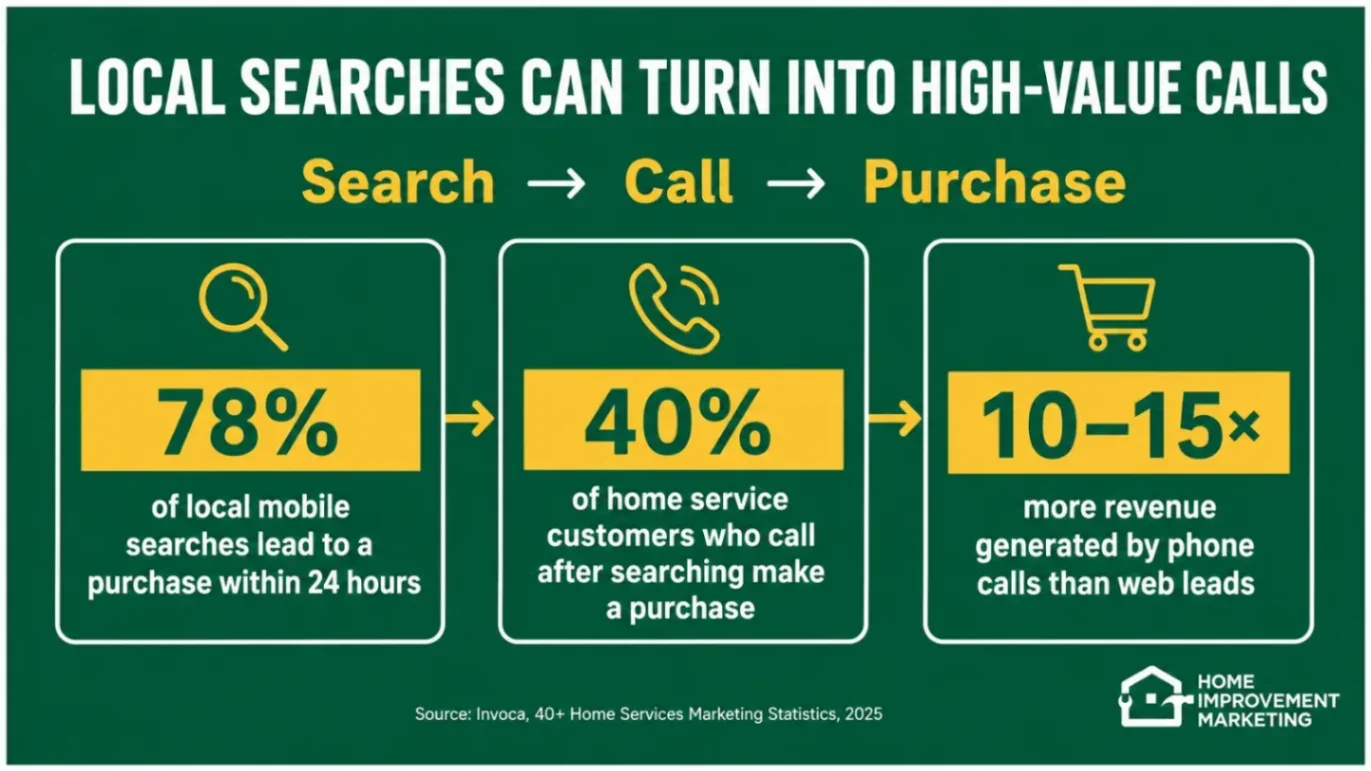
Build smaller campaigns by pest and location. For example, separate rodent, termite, and mosquito control services. Give each its own keyword list and landing page, then run your ads from there. This helps with lead generation because potential customers see a closer match.
Review the campaign mix each month. Then, move more budget toward jobs that generate profitable bookings. Pest demand changes with the weather, so plan campaigns before each busy period begins. Our guide to home services marketing during different seasons explains a few more strategies to try out.
2. Improve the Google Business Profile for local searches
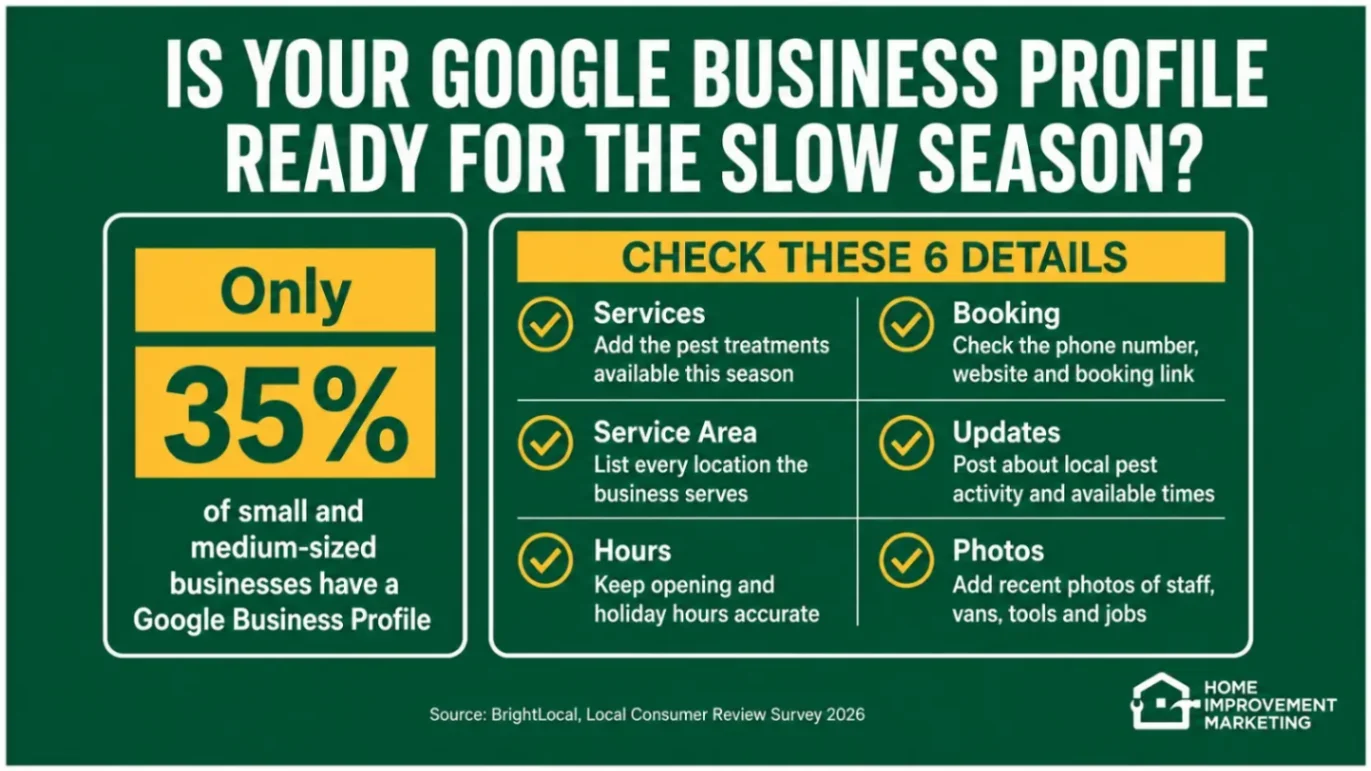
A complete and active Google Business Profile can help your business appear for relevant local searches. Update it during slow months to highlight the services you want to promote.
Choose the main category and other categories that fit. Check your pest control website, service area, phone number, hours, and booking link. Correct contact information also makes it easier for customers to reach you.
Add the pest control services you want to promote during the season. State which pest problem the company treats and where customers can book. Don’t stuff the text with the same keyword or make claims that the company can’t prove.
Post updates about local pest activity, tips, open times, and offers. A post about rodents in cold weather helps more than a service list.
Add recent photos of staff, tools, and jobs. These updates give leads more recent information about your team and the work you do. Track calls, site visits, and bookings from the Google Business Profile.
3. Ask for reviews about each pest service
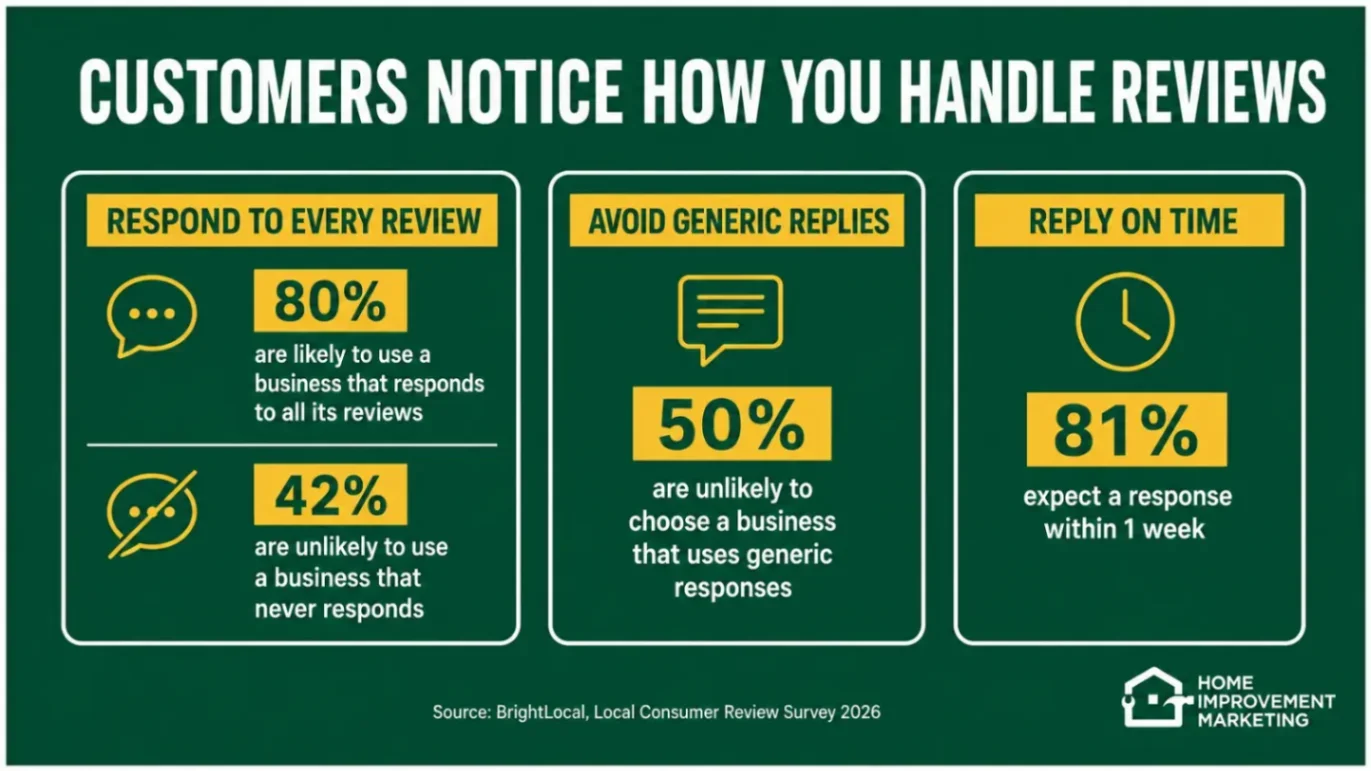
Online reviews help people compare pest control companies. Positive reviews show if a company responds on time, treats the right pest, and explains the work well.
Reviews can also decide whether a customer calls. In 2026, 68% of consumers said they'd only use a business with 4 or more stars.
Ask soon after the job. Send a short email or text with a direct Google review link. Don’t offer a gift for a good review. Invite customers to name the specific service they got from you. This gives future customers useful details if they need that service too.
Reply to every review without sharing private facts. Address complaints without arguing, and move the talk to email or phone when needed.
With permission, add short review quotes to:
- Pest service landing pages
- Google Ads assets
- Email and SMS campaigns
- Social media posts
- Quote request pages
Track requests, ratings, and new leads from the profile. Use that to improve your review process. You can also use it to find opportunities for repeat business.
4. Create a landing page for each seasonal pest
A general pest page makes visitors search for details. Build a separate landing page for each service that you promote. Search engine optimization can help that page appear in SERPs for specific pests and locations.
Google also advises to have a page that closely matches the ad and its keywords. Keeping the ad and landing page aligned makes it easier for visitors to find the service they searched for and take the next step.
For example, a rodent ad should link to a rodent page. Use the same setup for other pests and commercial work. Matching the search, ad, and landing page helps visitors find the right pest management service quickly.
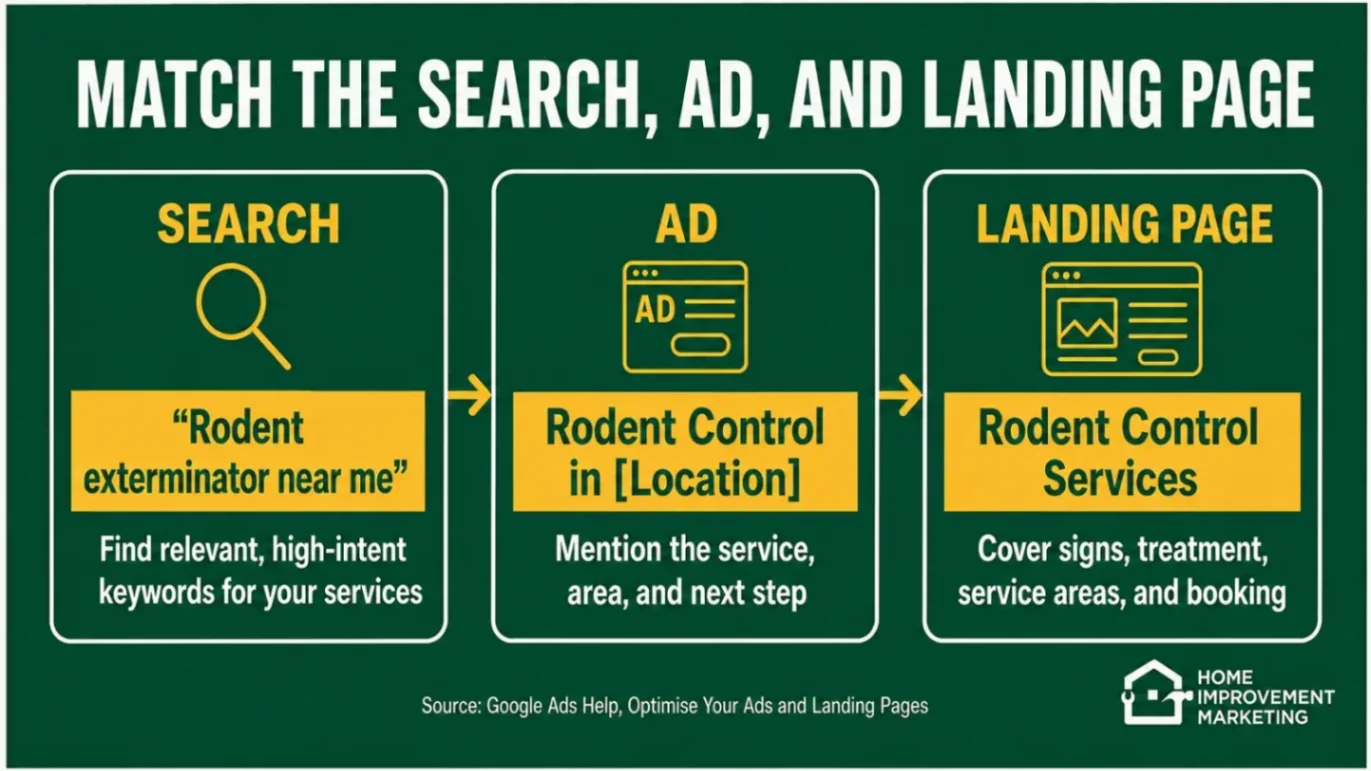
Each page should cover:
- Pests that the service treats
- Common signs of the problem
- Areas that the company serves
- Steps in the treatment and any prep
- Licenses, insurance, and staff skills
- Reviews about that service
- A phone number and short form
Avoid claims such as “100% effective” or “fully safe.” Use facts the company can prove, such as years in business, review scores, staff licenses, or guarantee terms.
Make the main action easy on a phone. Ask only for the details staff need to reply. Track calls, forms, booked checks, and jobs from each page. Use a CRM to follow each lead from the search engine to the sale.
If you don't have a website yet, read on how a new website helps with marketing and why you should create one.
5. Match Google Ads to seasonal search intent
Ads can bring leads in slow months. Yet old settings may spend money on services with little demand. This makes pest control advertising costly even when click totals look good.
Split campaigns or ad groups by pest type. You’ll gain more control over budgets, each keyword, ads, and landing pages. This digital marketing strategy shows which services drive sales.
Focus on searches that show a need for your services, such as:
- Pest control company near me
- Rodent exterminator near me
- Termite inspection service
- Commercial pest control company
- Bed bug treatment near me
- Emergency pest control
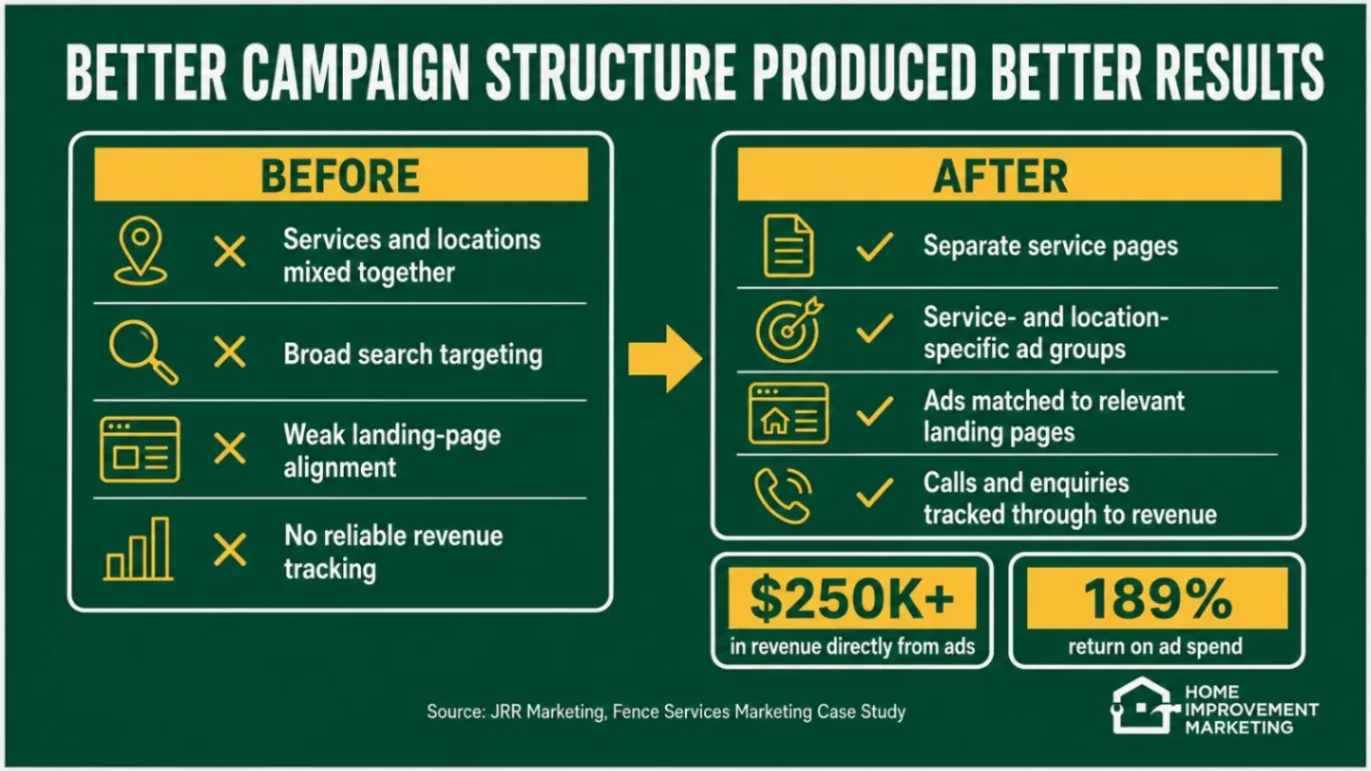
This structure has also worked in other home service markets. One of our campaigns that separated services, locations, ads, and landing pages produced 3 times more leads and reduced cost per lead by 65%.
Check search terms often. Add negative keywords for DIY goods, jobs, courses, free tips, pest photos, and pests the company doesn’t treat.
Match each ad to the pest and service area. Add facts such as open times, treatment choices, or verified review scores.
Judge ads by qualified calls, jobs, and cost per sale. These best practices help pest control companies generate new leads without paying for poor clicks.
6. Contact past customers through email and SMS
SMS and email marketing help you stay top of mind with existing customers. They also create new leads for yearly checks and repeat pest control services.
Group customers by past service, location, property type, and last visit. A homeowner who booked a termite check may need a different message from a restaurant with an ongoing service plan.
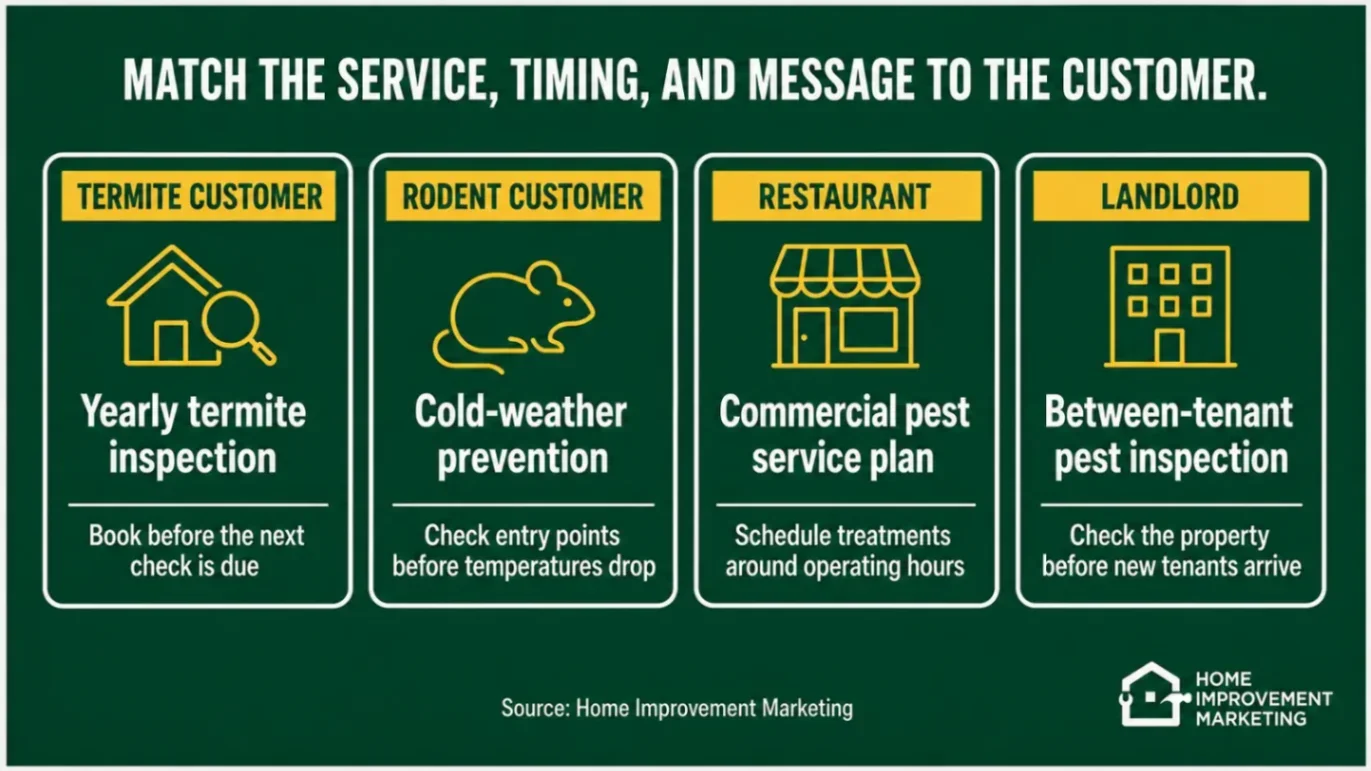
Try messages about:
- Yearly termite check reminders
- Rodent prevention before cold weather
- Follow-up treatments due soon
- Pest plans for commercial sites
- Early mosquito or outdoor treatments
- Checks for rental homes
Focus each message on one service. Explain why it may help, what customers can book, and how to contact the team. Don’t claim that a home has pests before a check.
Limit how often you contact people. Add an unsubscribe link to each email and follow local consent rules for SMS.
Use a booking link or tracking number for each campaign. Automate reminders through the CRM when consent allows. Well-timed messages can push for repeat bookings without overwhelming your contact list.
7. Build a referral program with local partners
A referral program can bring leads without more ad spend. Ask happy customers about people who may need pest management. You can also contact local firms that often face a pest problem.
Make referrals easy. Explain who the company helps, where it works, and how to share a lead. Use a form, link, or code to track the source.
Useful partners may include:
- Property managers and real estate agents
- Building inspectors and cleaning firms
- Plumbers and roofers
- Restaurants and hotels
- Storage site managers
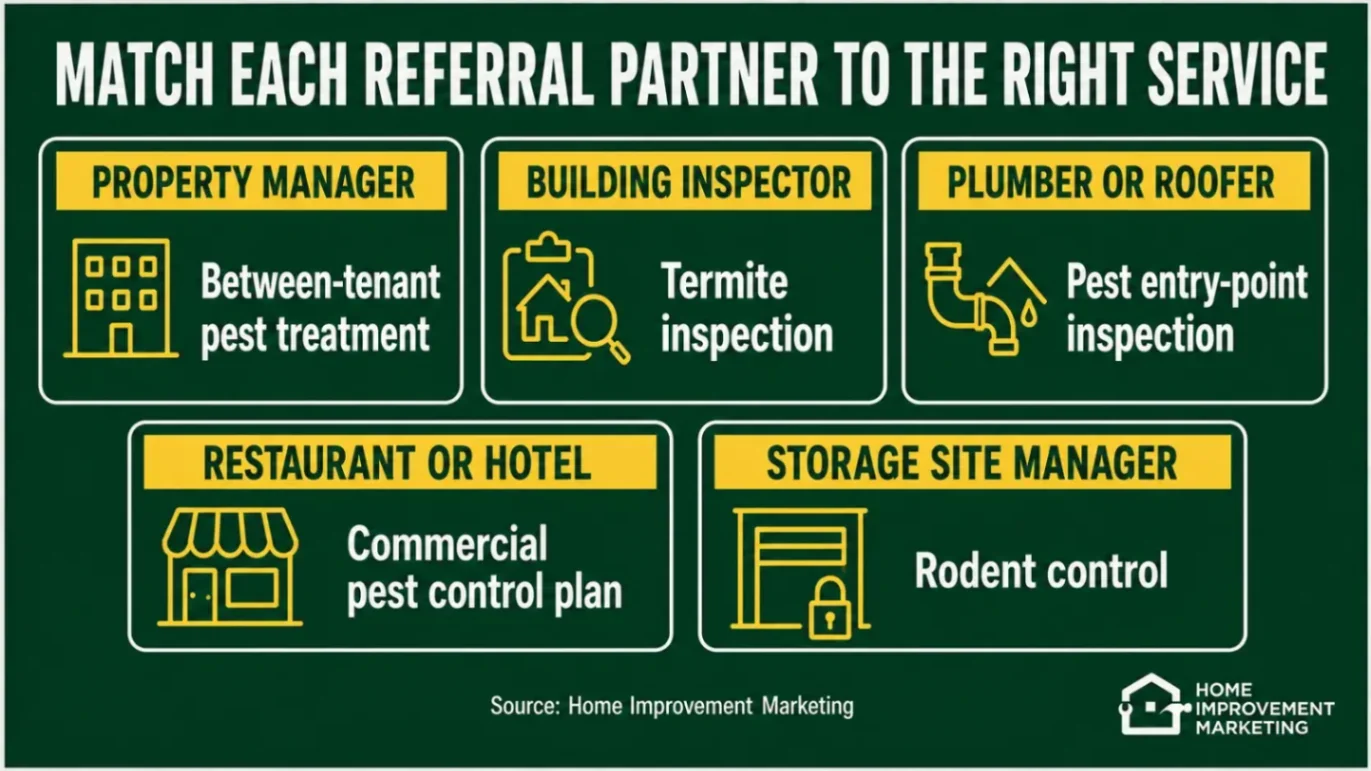
Give each partner details that fit their work. A property manager may need fast service between tenants, while an inspector may need a termite check for a buyer. Explain the service, reply time, and contact steps.
Follow local rules for rewards. State the terms and never link a reward to a good review.
Track the source, pest, booking rate, and job value. Automate source tags where possible, then focus on partners who send customers that fit the service.
8. Publish content about seasonal pest problems
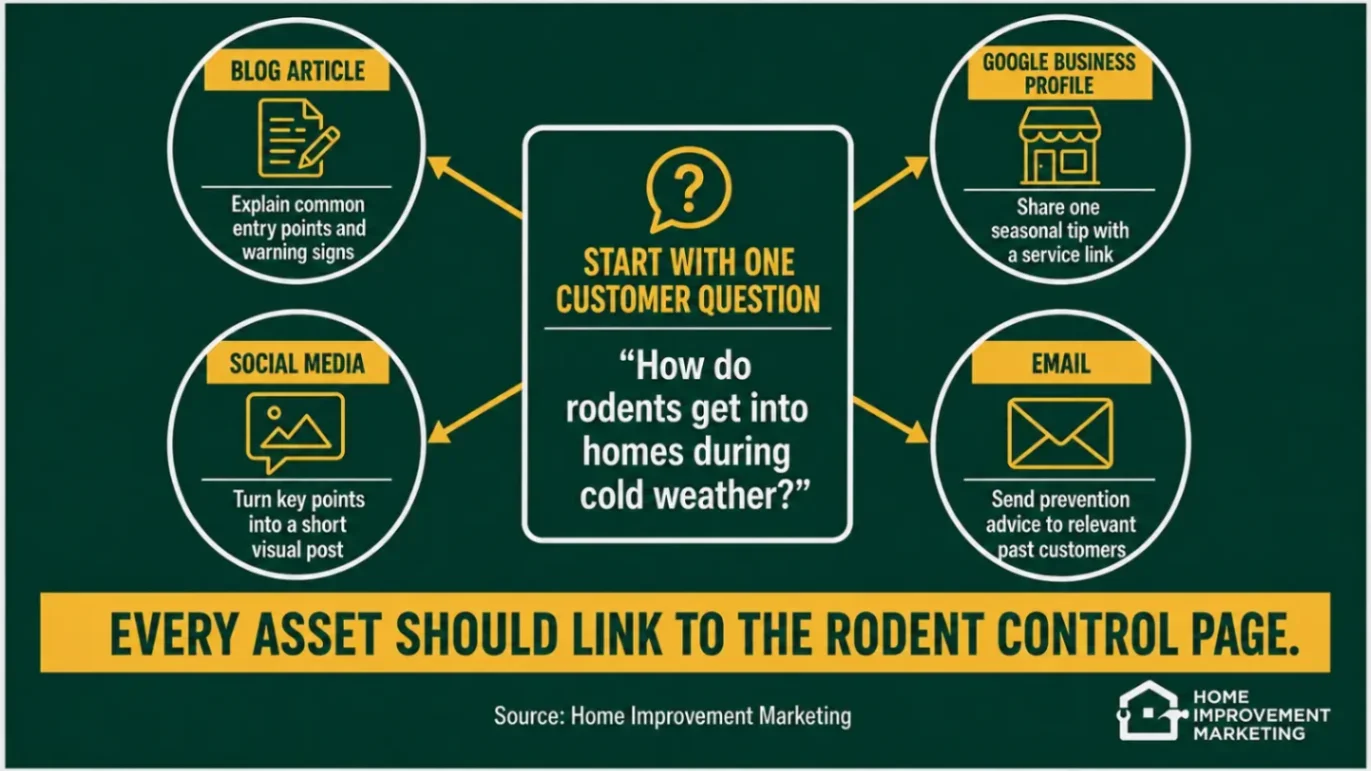
Helpful content can reach people who see pest signs but haven’t called. Use it for social media marketing, email, local SEO, and Google Business Profile updates.
Choose topics from calls, search terms, and staff notes. Cover problems that happen in the service area during slow months. This business marketing approach gives each article a useful role.
Topics may include:
- Signs of rodents in a roof or wall
- When to book a termite check
- How pests enter homes in cold weather
- Pest risks in food storage areas
- How to prepare for bed bug treatment
- DIY products vs. business service treatment
- Pest checks for rental homes
Explain what people can check safely. Don’t give steps that could expose them to chemicals, waste, bites, or damage.
Link each article to the right service page. Give readers one next step, such as calling the team or booking a check.
Track visibility in search results, site visits, calls, forms, and sales. Search engine data can show which content helps the pest control website reach a lead.
9. Build seasonal offers around useful services
A seasonal offer can give people a reason to book without a large discount. Bundle services that solve one problem, such as a termite check with an entry-point check. These can help pest control businesses reach new customers.
Base each offer on demand in the local area. Pest control remains one of the most in-demand home services. Options include one-time treatments, quarterly plans, and ongoing commercial work.
Other ideas include:
- Pest checks for landlords between tenants
- Rodent checks before cold months
- Commercial property checks
- Group bookings for property managers
- Service plans with set treatment dates
- Combined checks for related pest risks
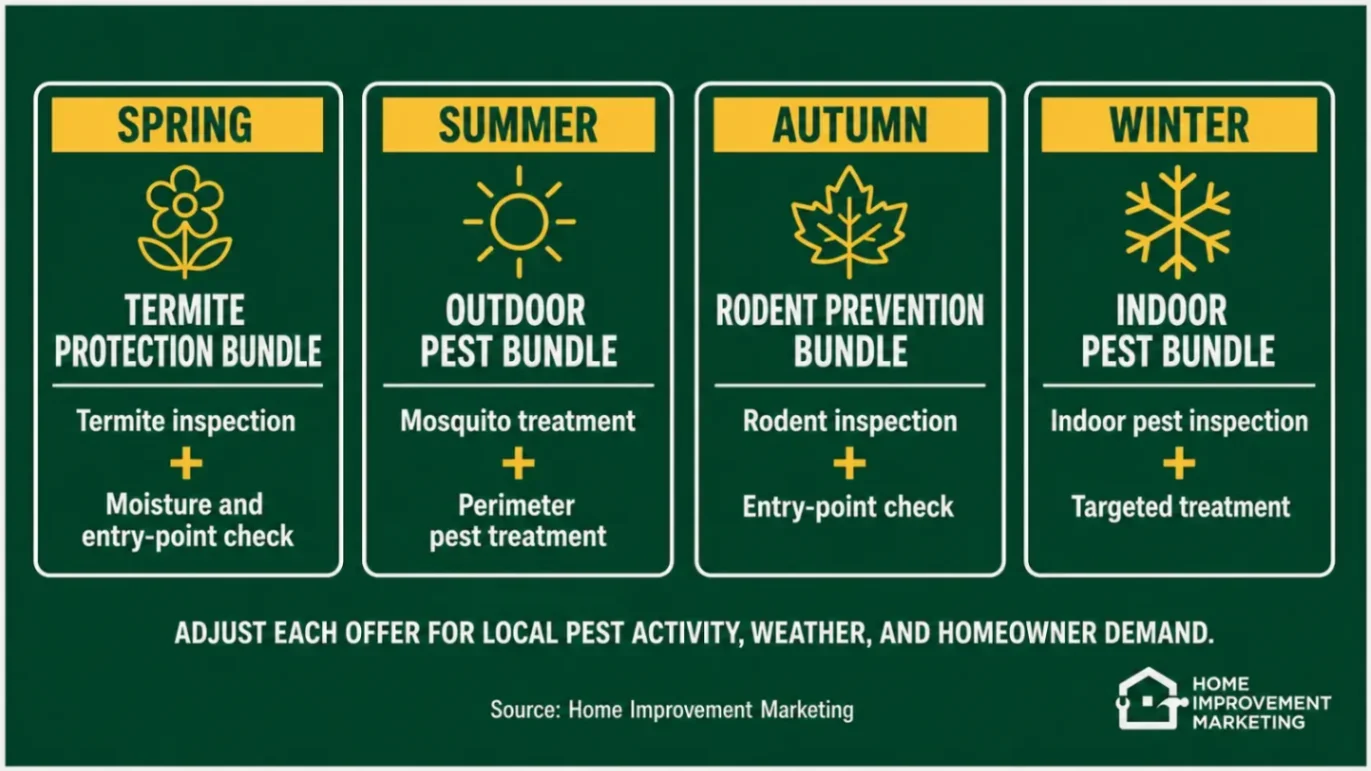
State what the offer covers. List the check areas, treatment limits, follow-up terms, property rules, end date, and extra fees.
Use the same offer details in ads, pages, emails, and call scripts. If the ad offers a check, don’t make the page sound as if the price includes a full treatment.
Test one offer at a time. Compare leads, booking rate, job value, service cost, and repeat bookings with the normal service.
Change or stop an offer if it brings price shoppers or low-profit work. The best pest control marketing strategies protect profit. They also boost lead generation.
Plan the next off-peak campaign around booked jobs
Measure your marketing results to see which services generate leads, booked jobs, and sales. This gives you a starting point.
Then, try some of the pest control marketing ideas from this guide and see which ones work best for your pest control business. You can use that to start creating a full pest control marketing plan. Set the budget, dates, and target cost, then run it for a few months.
Demand will keep changing with the seasons. Review your marketing efforts each month and adjust accordingly. That way, you're focusing on those that grow your pest control business without wasting your budget.
Managing your marketing takes time, regular testing, and accurate lead tracking. If that takes more time than you can spare, you can work with a digital marketing agency. An agency can handle the campaigns, tracking, and ongoing optimization for you. See how our pest control marketing agency can help you bring in more qualified enquiries throughout the year.