You’re spending your marketing budget on ads.
You’re posting on social media.
You’ve paid someone to do your SEO.
That’s the part most home service contractors can’t answer.
If you don’t know what’s working or don’t know how to measure marketing campaigns, you’re probably wasting time, or worse, throwing money.
This guide walks through seven simple but powerful ways to track marketing and understand your leads and sales.
How do you measure results in home services marketing?
#1 — Use call tracking numbers so you stop guessing where calls come from
Most people pick up the phone when they need help with urgent stuff like plumbing or pest control.
This means you need to know which marketing channel made the phone buzz.
There are call tracking tools that let you assign unique numbers to different channels.
Use one number for Google Ads, another for your website, and a separate one for yard signs.
When a lead calls, you instantly know where they saw you.
You can use analytics tools like WhatConverts, CallRail, ServiceTitan, and even some CRMs to make this easy.
They also record calls, which means you can check how your team’s handling them.
That’s one way to measure the success of your campaigns in a direct, trackable way.
#2 —Track your forms like you track your calls
Not everyone wants to call. Some people just fill out a form and wait.
The problem is, unless you’re tracking where that form came from, you’ve got no clue what drove the lead.
But you can fix that. Begin by adding UTM parameters to all your links.
They’re tiny tags on your URL that tell your site where a person came from.
This is a simple step in any solid digital marketing strategy.
You can add UTM parameters to your links by following these few steps:
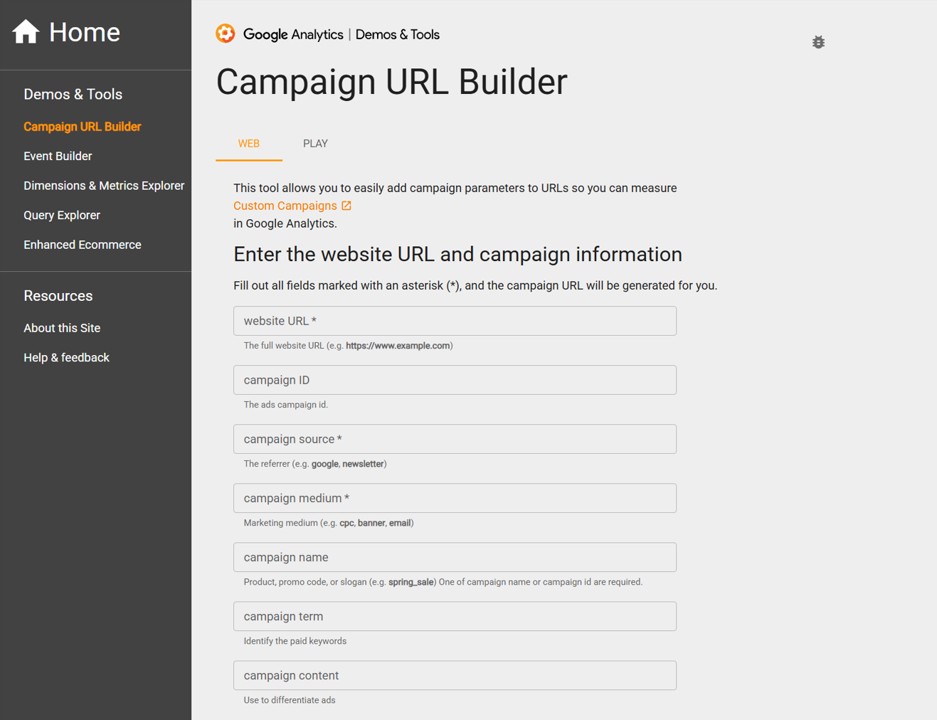
1. Go to the free Google Campaign URL Builder. You’ll see a short form asking for some basic info.
2. Fill in the form. Add details for the following:
- Website URL – link to the page you’re sending people to
- Campaign Source – where the click is coming from (like Facebook, email, or Google Ads)
- Campaign Medium – the type of traffic (such as cpc, newsletter, or social)
- Campaign Name – a label to help you identify the campaign (like spring_sale or deck_cleaning_launch)
That’s it. You can also add other bits of info to track other fields.
3. Once the tool gives you your custom URL, just copy and paste it into your email, ad, or social post. If it looks long and messy, use a link shortener like bit.ly to clean it up.
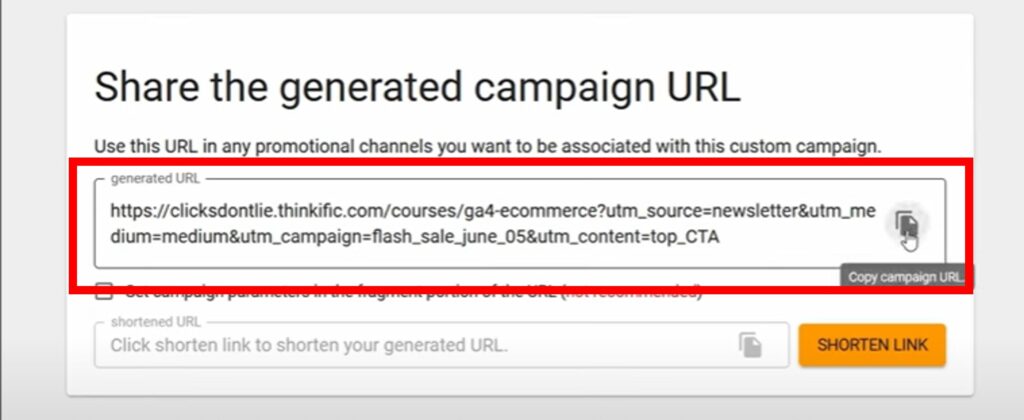
4. If you have Google Analytics set up, it’ll automatically start tracking visits from that link. You can see your website traffic by logging into GA, going to Acquisition > Traffic Acquisition, and then clicking into each one to see where traffic is coming from and how it’s performing.
With UTM tracking, you’ll know, for example, that the email marketing campaign brought them in.
If you want to make things easier, tools like Gravity Forms (for WordPress) or a CRM like Jobber can capture these details automatically.
Each week, check:
- Which pages are converting
- Which sources send serious leads, especially when you run digital advertising or seasonal campaigns
- Which campaigns bring junk traffic
This process improves your marketing ROI and gives you a clearer picture of your marketing and sales alignment.
#3 — Track marketing cost per lead across all your platforms
You didn’t start your home services business just to keep guessing and wasting money.
If you drop $1,000 on ads and only get three leads, something’s off.
That’s why you need to track your marketing cost per lead (CPL) across every platform.
It let’s you see what campaigns are performing and what’s just burning cash.
It’s also one of the most basic parts of any solid home improvement marketing strategy and a clear way to accurately measure the impact of marketing efforts.
Here’s how to keep it simple:
1. Get your total spend per platform.
2. Count how many real leads came from each one.
3. Divide the total marketing spend by the number of leads.
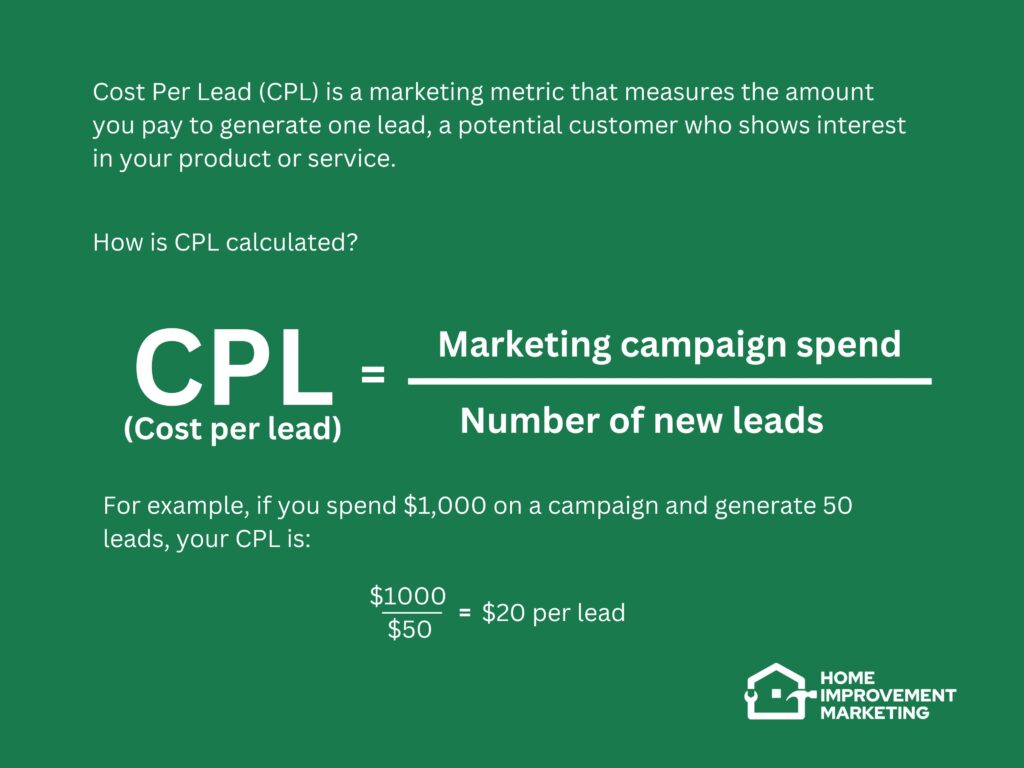
Now you’ve got your cost per lead (CPL).
You can start comparing which platform is giving you more bang for your buck.
This is a key performance indicator many pros use to measure campaign performance.
For example:
- Google Ads: $600 spent / 12 leads = $50 CPL
- Facebook: $300 spent / 2 leads = $150 CPL
There’s a bit of nuance, of course, especially with Google Ads.
Google shows you a “cost per conversion” number right in the dashboard.
But the catch is… that number is only as accurate as the conversion actions you’ve set up.
If your tracking includes things like a simple page view or a generic button click, Google will still count those as conversions, even if they’re not actual leads.
That can make your numbers look better than they really are.
So, you need to make sure you’re only counting legit leads, like form submissions, phone calls, or bookings.
1. Go to Google Ads
2. Click on Goals → Conversion → Summary
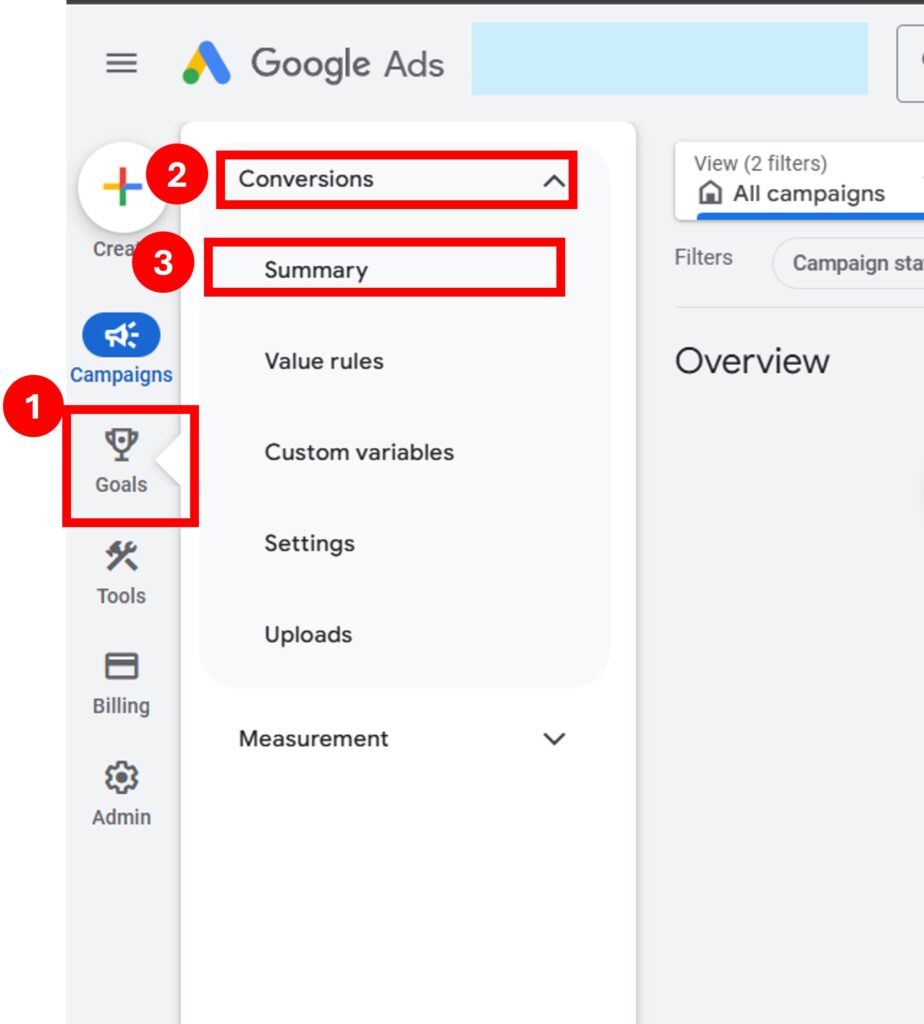
3. Then, click Leads
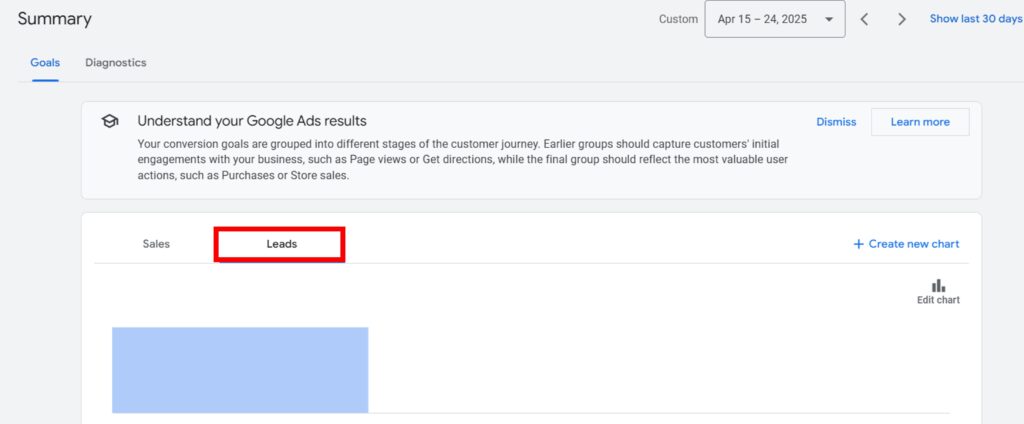
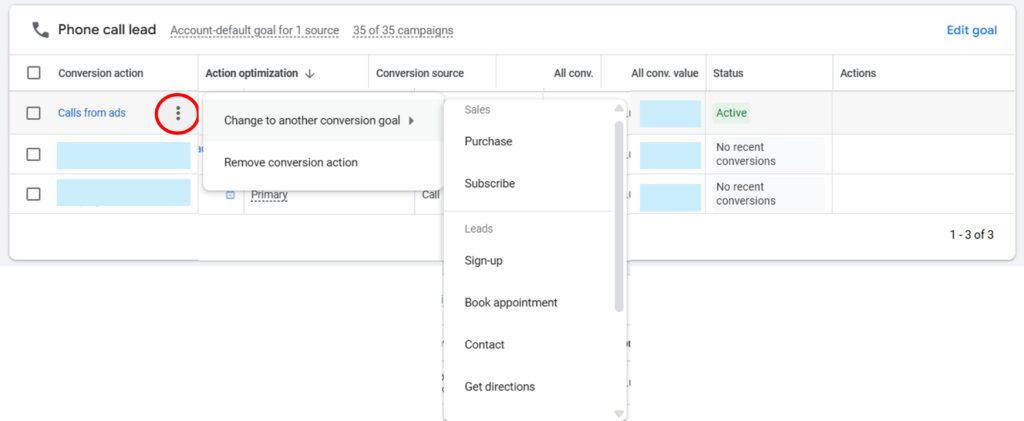
4. Scroll down to see the list of all the conversion actions you’ve set up (like phone calls, form submissions, or button clicks).
5. Change to another conversion goal or remove anything that doesn’t represent a real lead, like “page view” or “button click”.
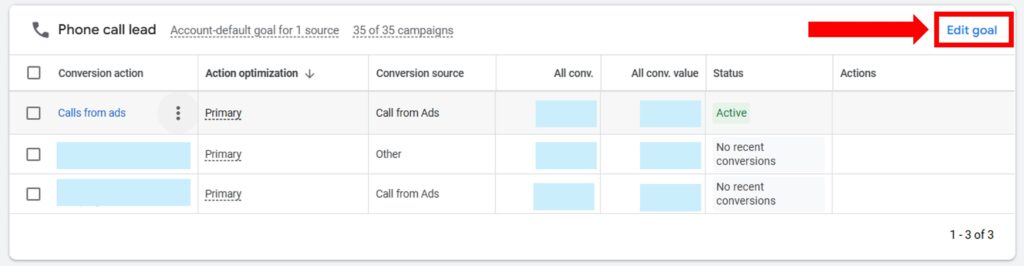
6. You can also Edit goal to change goal settings.
7. Keep the high-value actions, such as:
- Form submissions
- Phone calls (from ads or site)
- Booking confirmations or purchases
These are the key performance indicators that matter.
The more accurate your conversion tracking, the more useful your cost-per-conversion metric becomes.
It’ll give you a clear picture of marketing performance and give you an idea of what’s actually driving results.
That way also, the CPL you see in Google Ads also reflects real people reaching out instead of fluff that inflates your marketing return.
Outside of Google Ads, tracking CPL gets a bit trickier.
Platforms like Facebook, Yelp, local directories, or even offline marketing don’t always give you clear conversion data.
That’s where lead tracking tools come in. Once you’ve got everything tracked, you’ll see what’s actually working and which marketing approaches aren’t delivering.
But here’s the kicker: lead quality matters more than cost.
A $20 lead that never converts is more expensive than a $100 lead that turns into a $5,000 job.
So when you’re deciding where to put your money, ask yourself:
- Are these leads turning into actual jobs?
- Are they in your service area?
- Are they the kinds of jobs you want more of?
This helps you measure success the right way.
In the end, tracking your CPL and doing it accurately helps you stop wasting money and start investing it where it counts.
That’s how the best home service businesses grow fast. They track what’s working, cut what’s not, and stop guessing.
#4 — Use your CRM to track which leads turn into jobs
Getting leads is great.
But booked jobs are what pay the bills.
That’s why top home service companies don’t stop at lead volume. They look at which leads actually turn into paying work.
Your CRM is the best place to track the number of visitors that turn into new customers.
Tracking your funnel in this way is essential for understanding your overall marketing effectiveness.
With CRM, they’ll tell you if that call, form, or booking came from Google Ads, Google Organic, Facebook, Yelp, or another channel.
It also lets you know how well your marketing strategy is performing across different platforms.This helps you adjust your home services marketing during different seasons, since lead quality can shift depending on the time of year.
But don’t just let the data sit there. Use it.
Regularly review your CRM reports. If you can, do it weekly and look at:
- How many leads came from each source
- How many turned into jobs
- How much revenue each one brought in
These metrics are one way to determine the success or failure of your marketing initiatives.
Also, that’s how you spot your best channels.
For example, your CRM might show that Google Ads brought in 10 leads last week.
And 7 of those turned into booked jobs like full AC replacements or ductless mini-split installs, each worth $4,000–$6,000.
Meanwhile, Google Organic brought in 25 leads, but only 4 turned into jobs.
Both channels brought in work, but one clearly brought in more valuable jobs.
This comparison gives you clear insight into the results you’re actually getting.
That’s why it’s so important to look beyond just how many leads you’re getting.
You want to focus on which ones are actually driving revenue.
Once you’re tracking lead-to-job conversions, you can start improving them, too.
Speed of follow-up plays a big role here. Faster responses often lead to better close rates.
Always review your call scripts and intake process to identify where leads might be slipping through the cracks.
Some team members may be stronger at converting leads. Using call recordings can help coach others to improve.
This small change alone can significantly impact customer retention rates over time.
You can also look at which platforms are consistently sending unqualified or low-intent leads. This way, you can adjust your targeting or messaging before wasting more time and budget.
#5 — Track return on ad spend, not just clicks
Anyone can rack up a bunch of impressions and traffic.
But clicks don’t mean much if they don’t turn into actual bookings or revenue.
What really matters is the return on ad spend (ROAS).
This is one of the clearest metrics for measuring the return on investment of any digital marketing campaign because it tells you how much money you made for every dollar you spent.
Here’s how to do it:
- Add up the revenue from a campaign
- Divide it by what you spent
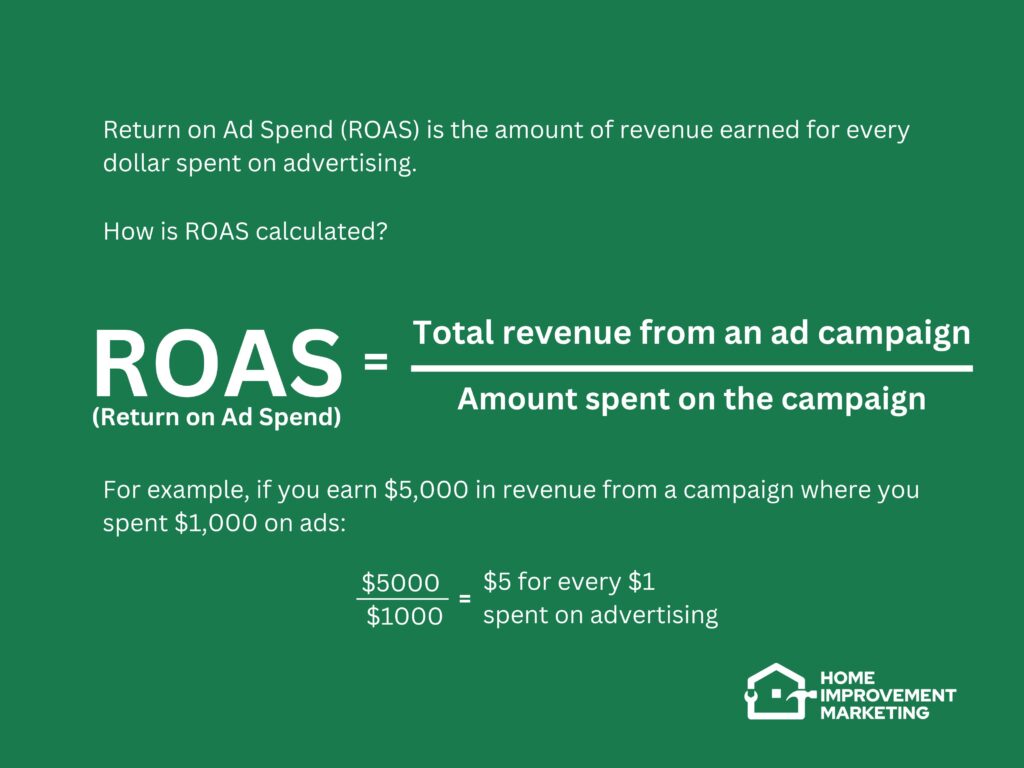
Say you spent $1,000 on ads. Then, those ads led to $4,000 in booked jobs.
Your ROAS is 4. This means you earned $4 for every $1 you spent.
When you track this across all your campaigns, you can stack them side by side and see which ones are really pulling their weight.
One campaign might bring in tons of leads but barely any jobs.
Another might deliver fewer leads, but they’re high-value installs that drive serious revenue.
If you spot a campaign with low ROAS, pause it or adjust your targeting.
Then, put that budget toward what’s actually working.
If the numbers aren’t adding up or you’re not sure what to adjust, it might be time to talk to your marketing team, if you have an in-house team.
You can also contact home improvement marketing experts who can help make sense of it.
Once you’re tracking ROAS, you can make it better.
- Only track real revenue — not estimates or leads, but jobs that actually got booked and paid. If someone clicked but never followed through, that shouldn’t count toward your revenue total.
- Test different offers — sometimes, all it takes is tweaking your ad copy. A “Free estimate” might pull better than “$50 off”, or vice versa. Try different hooks and see which ones actually bring in jobs. You might even find that small changes and adding keywords improve your campaigns’ success on the search engine results pages.
- Filter out low-quality leads — ads that attract price shoppers or people just “checking” can inflate your CPL and crush your ROAS. Be clear about your services and pricing upfront so you’re bringing in serious enquiries. This is where content marketing can help educate leads and increase conversion intent.
- Run retargeting ads — people don’t always book on the first visit. Retargeting helps you stay in front of them and often delivers great returns with a small extra spend.
- Set clear job value goals — before you scale a campaign, know what makes it worth it. If you spend $150 to land a $175 job, your margin might be too slim. But if that same $150 brings in a $1,200 job, that’s a campaign worth doubling down on. Setting these marketing goals in advance makes campaign success easier to track.
Tracking ROAS helps you stop guessing and start scaling.
When you know exactly which campaigns are making you money and how to make them better, every dollar you spend works harder for your business.
And ultimately, that’s the kind of marketing that drives real business marketing success.
#6 — Fix your landing page if it’s leaking leads
You can have the best ads in the world, but if your landing page’s slow, confusing, or just plain ugly… people won’t stick around.
That’s why it’s important to check how your page is actually performing.
The number to watch is your landing page conversion rate. It’ll tell you how many visitors take action, like calling, booking, or filling out your form.
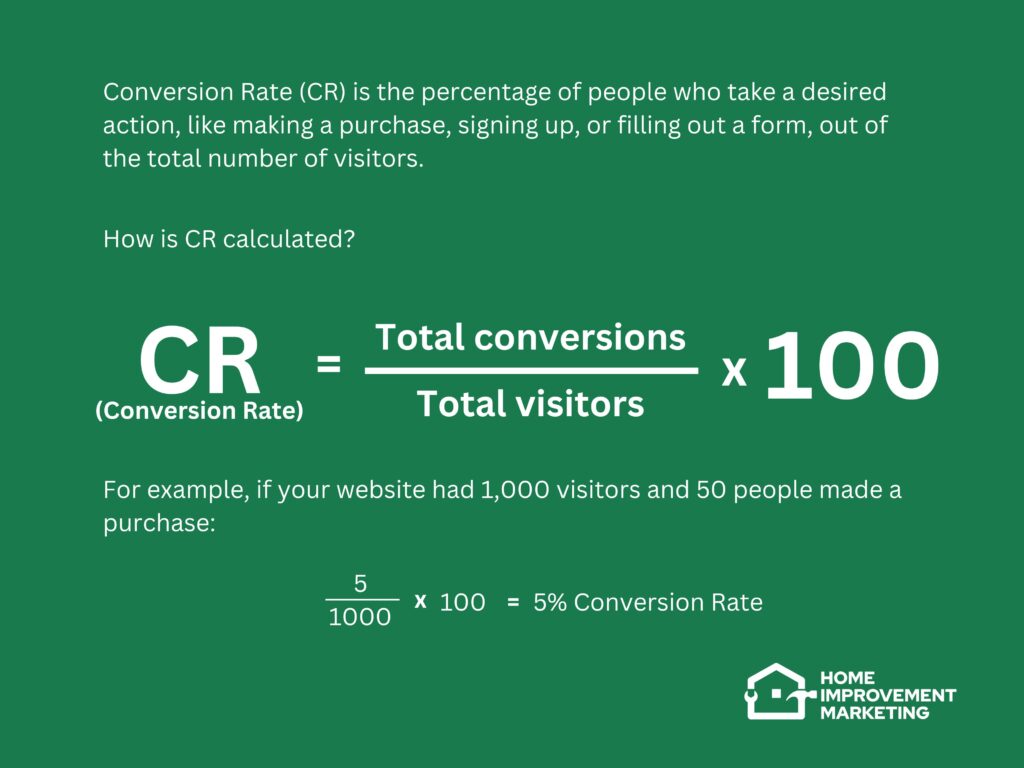
For home services, you want this rate somewhere between 10%–20%. If you’re offering emergency work (like plumbing or pest control), you should aim even higher.
If your page is converting under 10%, it might be time for a tune-up.
There are simple tools that help you track and improve this:
- Hotjar shows heatmaps and screen recordings so you can see where people click and where they drop off
- Google Analytics helps you spot high bounce rates or exit pages
- Unbounce lets you test different versions of a page without needing a developer
And if your page isn’t converting, don’t panic.
You can just start with the basics:
- Change the headline. Make it clear, punchy, and focused on solving a problem.
- Make your phone number and booking button really easy to find.
- Cut out long chunks of text. People scan instead of reading the whole text.
- Add trust boosters like Google reviews, BBB logos, or “Licenced & Insured” badges.
- Use real photos of your team or vans instead of boring stock images.
All these details help turn visitors into paying customers and help improve the effectiveness of marketing across the board.
All these details help turn visitors into paying customers.
It’s also a good habit to check your pages regularly, at least every couple of weeks.
Don’t let a bad page sit for months just because it “looks fine”.
If the numbers are low, fix it fast. Every day you wait is another day you’re paying for traffic that doesn’t convert.
If the numbers are low, fix it fast. Every day you wait is another day you’re paying for traffic that doesn’t convert and hurting the success of your marketing campaigns in the long run.
#7 — Do weekly check-ins and monthly trend reviews
If you’re only checking reports once in a while, you’re not seeing the full picture.
Data gets stale fast, and gut feeling can lead you in the wrong direction.
That’s why the top home service businesses look at their numbers every single week.
During your weekly check-ins, look at more than just how many leads came in.
Track metrics like:
- Number of new leads, calls, and form submissions
- How many jobs were actually booked
- Which platforms each lead came from
- Cost per lead (CPL) per channel
- Lead-to-job conversion rate
- Return on ad spend (ROAS)
- Call answer rate and speed to follow-up
- Revenue per campaign or platform
Tracking these weekly helps you catch problems early.
For example, your Google Ads cost per lead suddenly doubled. Or your form fills dropped after a page update.
Spotting this now lets you act fast, before it burns your entire monthly budget.
And don’t stop at weekly numbers.
Step back once a month to look at the bigger picture. Compare this month’s results to last month’s. Check if your organic traffic is growing or if more leads are turning into jobs.
This kind of marketing campaign measurement gives you a clear view of what’s working.
If you notice your CPL creeping up, that’s your cue to start testing.
- Tighten up your targeting
- Adjust your ad copy or offer
- Revisit your intake process to see if leads are getting lost or ignored
Same goes for conversion rates. If fewer leads are turning into jobs, take a look at how quickly your team is following up.
The goal’s to spot patterns, fix issues fast, and double down on what’s working.
When you build the habit of checking key metrics weekly and reviewing trends monthly, you’ll make better decisions.
You’ll also notice that your marketing will work harder for you every single day.
Stop flying blind and start tracking what matters
Most home service businesses don’t track half of what they should.
They think marketing is just about getting their name out there.
But if you’re not watching how many leads come in, where they came from, and which ones turned into booked jobs, then you’re not really steering the ship.
You’re just hoping for the best.
If you’ve made it this far and still aren’t tracking properly, now’s the time to fix that.
Start simple.
It’s a smart way to increase brand awareness, improve customer retention, and boost the success of your marketing overall.
In online marketing, trends change quickly and your visibility on the page of search results can make or break your lead flow. So you need to be on top of it all the time.
Even one or two of these methods can show you things you’ve been missing.
You’ll find plenty of these methods explained in any decent home services marketing blog, often with step-by-step advice.
And once you start seeing patterns in your data, it becomes way easier to make smart, confident decisions.
If all of this feels like a lot to take on, that’s totally normal.
Tracking and measuring results isn’t something most business owners were trained to do.
In that case, it might help to speak with a marketing consultant or a home services marketing agency.
They can walk you through the setup, help make sense of the numbers, and explain what kind of return you’re getting.
This way, every decision you make is based on real, measurable results aligned with your marketing objectives.