Marketing can get expensive fast for small contractors.
You may have a great service, strong reviews, and years of experience, but still struggle to get leads. Meanwhile, large companies can spend thousands each month on marketing.
To stay competitive, you need to be selective in your approach to marketing.
The best home improvement marketing ideas will place you in front of your target audience without costing a lot. Here are 9 ways to market your company without spreading your budget too thin.
1. Focus your website on the services you want to sell
Your website should make it easy for homeowners to find the service they need.
Don't put every service on one broad page. Create separate pages for high-value services. Each page should explain that specific service, where you offer it, what the job includes, and how someone can contact you.
Add real on-the-job photos when you can. This gives potential clients more useful information before they call.
It also gives search engines more information about your services. A kitchen remodeling page will rank better for "kitchen remodeling" than a full service page.
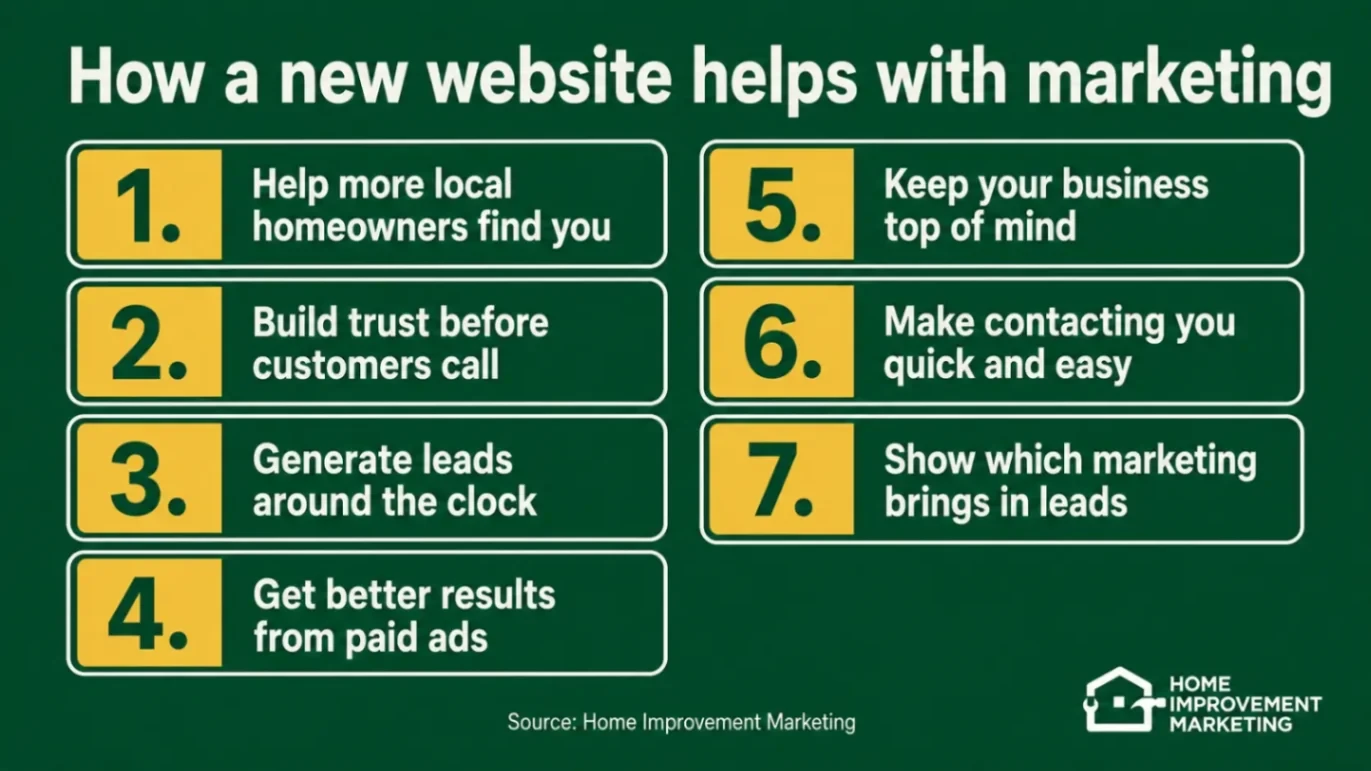
If you don't have a website yet, then make one as soon as you can. A new website helps lead generation in the easiest way for small businesses.
2. Turn finished work into marketing content
One of the easiest home improvement marketing ideas is to use work already done.
Every job you do gives you material for your marketing campaigns. It also gives potential clients a better idea of the type of work you handle.
You don’t need a big content plan to get more mileage out of the work you’re already doing. Start with the job itself.
Take a few photos before, during, and after. Jot down what the customer needed, what your team did, and anything that made the project a little different.
Now you’ve got something useful to work with.
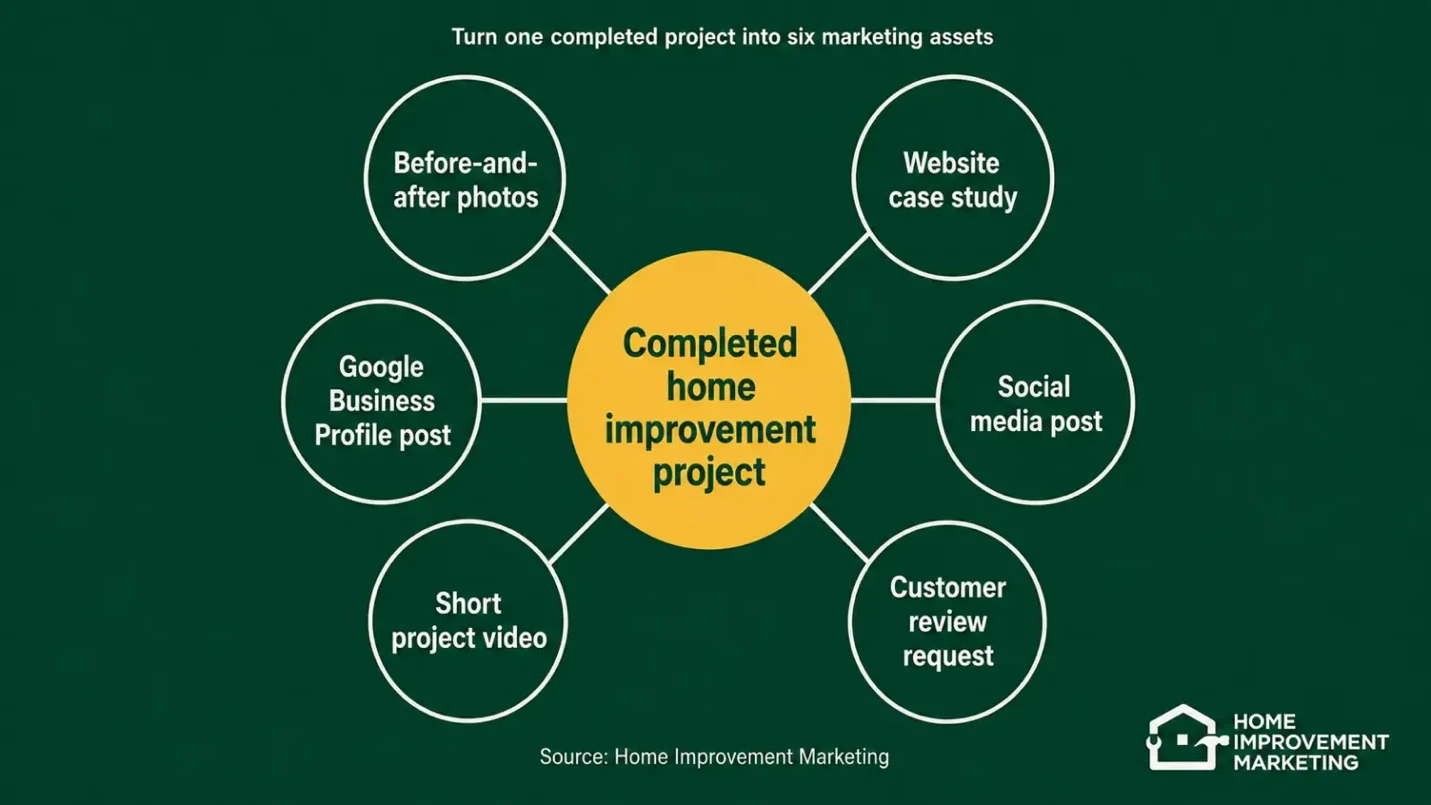
That one job can become a page on your website, a Google Business Profile post, or a social post. Instead of scrambling for topic ideas, just build content around work you’ve already completed.
Say you’ve just replaced a roof in Plano. You could turn that project into a blog post. Cover the damage you found, how you approached the replacement, which materials you used, and how it turned out.
This helps homeowners see what you can do. It’s more useful than another broad article about the benefits of a new roof.
3. Keep your Google Business Profile updated
Your Google Business Profile can help local homeowners find your company when they search for nearby services. Keep your services, hours, phone number, service areas, and photos up to date.
Reviews are another important part of your Google Business Profile. When a customer is happy with the finished job, that’s a good time to ask them to share their experience.
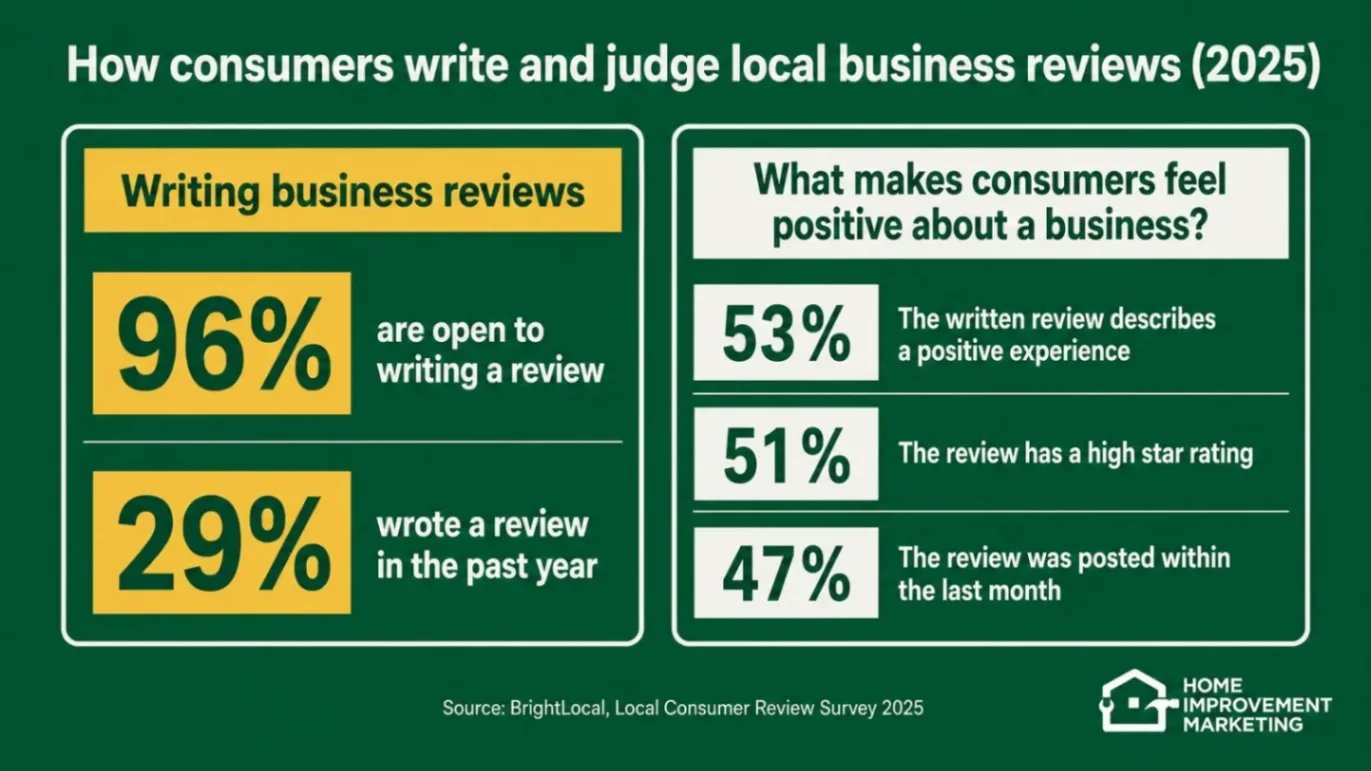
There’s a good chance they’ll say yes. A 2025 survey revealed that 96% of consumers are open to leaving a business review.
You don’t need to give them a script or offer a reward. Keep the request simple and let the customer describe the experience in their own words.
4. Spend your Google Ads budget on high-intent terms
Google Ads can bring in leads quickly, but a small budget can disappear fast. To avoid this, focus your marketing campaigns on searches that show buying intent.
A small campaign can work well when most of the budget goes toward people who are already looking for the service you sell.
For example, someone searching for "kitchen remodeling contractor near me" may be ready to hire. Someone searching for "kitchen design ideas" may just be looking for ideas.
Location targeting and negative keywords help with this as well. Limit your ads to the areas you serve and block terms related to jobs, DIY instructions, free plans, and training.
This helps you avoid paying for clicks that are unlikely to become customers.
5. Turn customer questions into short videos
Short videos or reels can help explain your services without spending much on production. Use your phone to record and answer questions customers often ask before hiring you or even show what you do on the job.
Keep each video focused on one topic. Aim for 30 to 90 seconds and get straight to the answer.
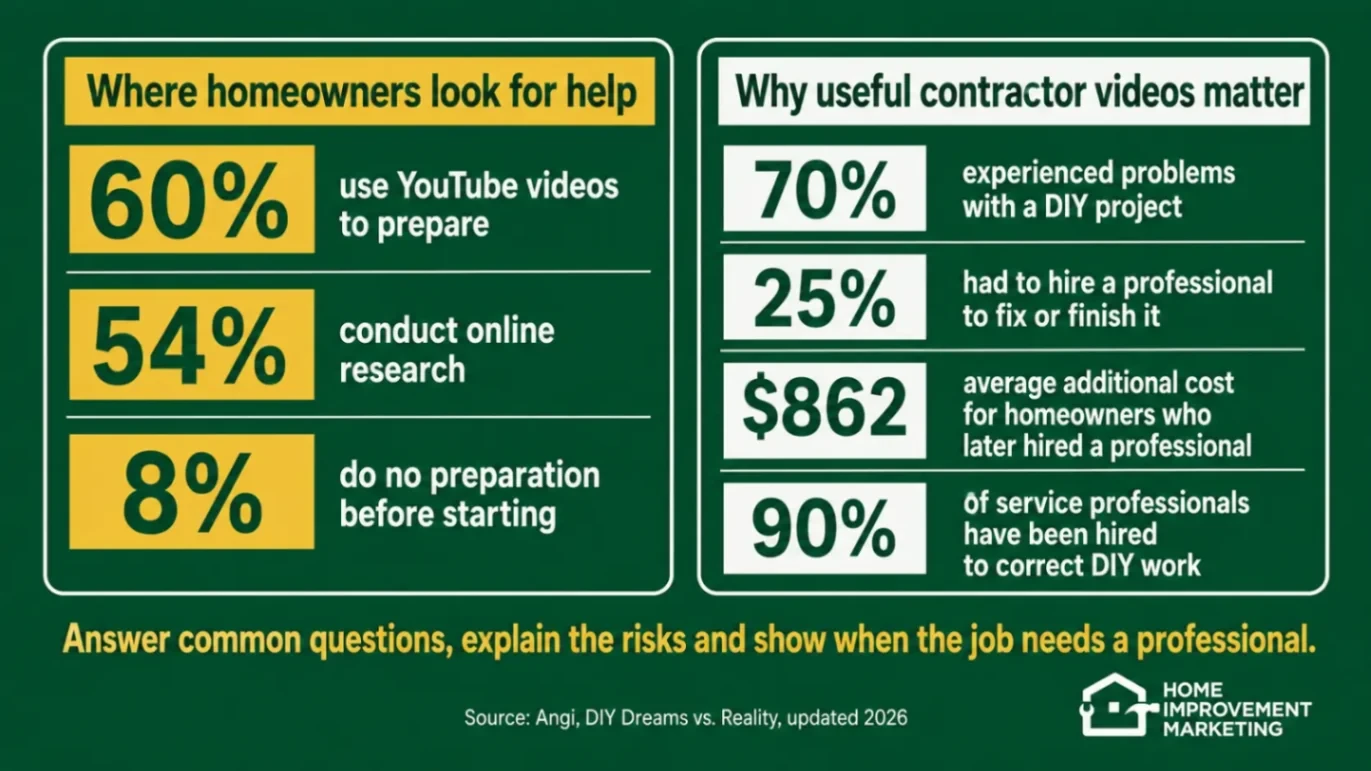
You can post the same video on your website, Google Business Profile, YouTube, or social media. Angi found that 60% of homeowners use YouTube to prepare for a DIY project, while 54% search online for information.
This gives you more ways to reach potential customers without creating a new piece of content for every platform.
6. Ask for referrals after good projects
In a 2025 survey, 65% of small businesses named customer referrals as their top source of new customers.
A referral is someone who has already heard about the caliber of your work from a person they trust. That can make it easier to start the conversation with that person.
Make referrals part of your normal closeout process. After finishing a job, thank the customer and ask if they know anyone who may need the same type of service.
Timing matters. Someone who has just had a new roof, kitchen, or outdoor space installed has a recent experience they can share with friends and family. You can also ask for a review at the same time, as long as the message stays short.
Referrals will help build trust before you ever speak with a new lead. A recommendation from someone they know can carry more weight than an ad.
You can also use seasonal marketing for home services to stay in touch with past customers.
7. Focus on the areas where you want more work
The best marketing strategies for home improvement businesses usually start with the areas where the company already has a reason to compete.
You don't need to market across an entire city. A contractor may serve 30 ZIP codes but get most of its best jobs from five or six areas. Those areas deserve more attention.
When people need a local service, they’ll often look online first. In a survey on how consumers search for local businesses, 84% searched for one online between May and July.
Look at your past jobs. Find the neighborhoods where you get regular jobs, larger projects, repeat work, or strong profit margins. Focus your marketing strategies on those locations.
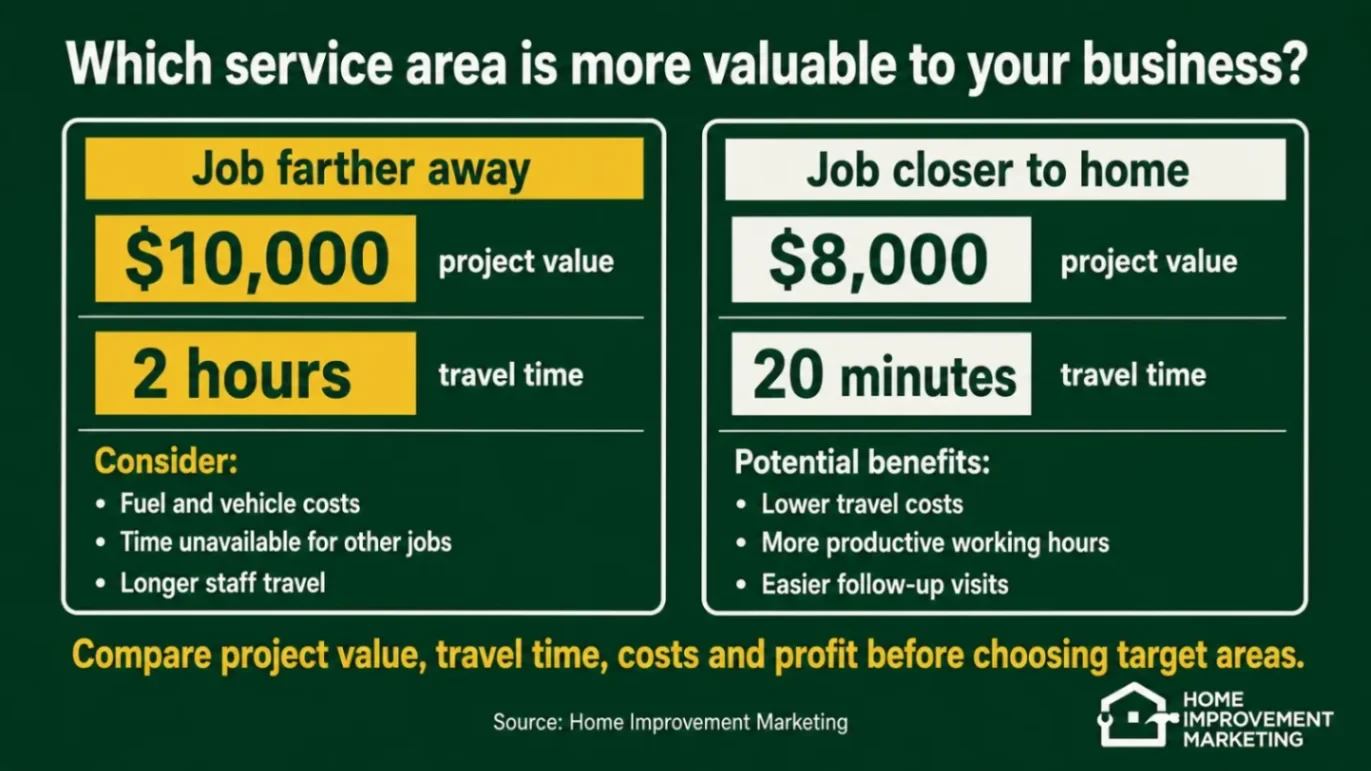
Your location choices should also match your travel costs. A high value job that takes two hours to reach may be less profitable than a lower cost job 20 minutes away.
8. Partner with complementary local businesses
Look for local businesses that serve the same homeowners without offering the same service. Start with a few businesses you already know or have worked with. Make sure they serve the same areas and have a good reputation before sending customers their way.
The goal is to create a simple referral network. You can recommend each other's services when a customer needs help outside your scope. This can help you reach homeowners who already have a project and may need your help.
A good partnership introduces you to more local homeowners and brings in referral leads. It gives both businesses another way to find customers without spending more on ads.
9. Refresh old pages before creating new ones
You don't need to always publish new content to improve your marketing.
Look through your website for pages that get traffic but few inquiries. These could be service pages or older articles.
You may only need to add better service details, stronger calls to action, new information, or links to other pages.
For example, you could update an old bathroom remodeling page with your current service areas and project types.
It also gives you the chance to answer some FAQs. This gives homeowners useful information before they contact you.
It's a very budget-friendly marketing strategy; you're improving content you already have instead of paying to create something new.
This also supports SEO and help more of your existing website traffic turn into leads.
What to avoid when money is tight
Don't split a small amount of money across every platform just because other contractors use them. A $200 budget spread across five channels may give you too little data to know what worked.
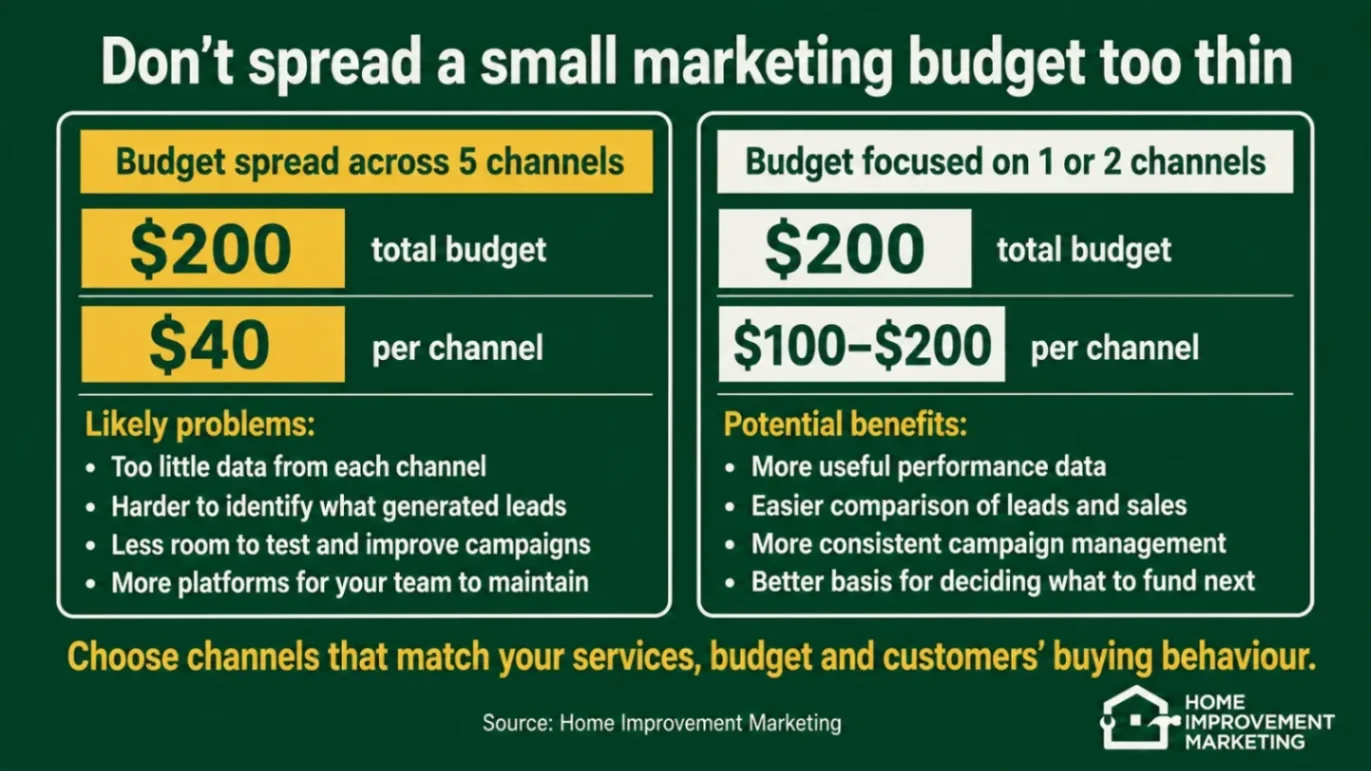
Focus on a few effective marketing strategies that match your service and reach your target audience.
Don't judge a channel after a few days, either. Give it enough time to show results. Then compare leads, estimates, closed jobs, and revenue.
You also need to keep up with the work. Publishing ten posts in one week and then going silent for three months won't help much.
The same goes for reviews, project photos, website updates, and paid ads. Pick a schedule your team can maintain and keep at it.
How to make a small marketing budget go further
The best marketing strategies for home improvement companies start with work you're already doing.
One completed job can give you photos, a social post, a review request, and a referral. That gives you several pieces of content from one job.
You can also use your sales calls to find new topics. If customers keep asking the same question, turn that question into an article or video. This makes your marketing efforts easier to manage because the ideas come from your actual business.
Start with your highest-value services and the areas where you want more work. Then focus your marketing efforts on channels that can reach people already looking for those services. For many contractors, that means local SEO, Google Ads, reviews, project content, and referrals.
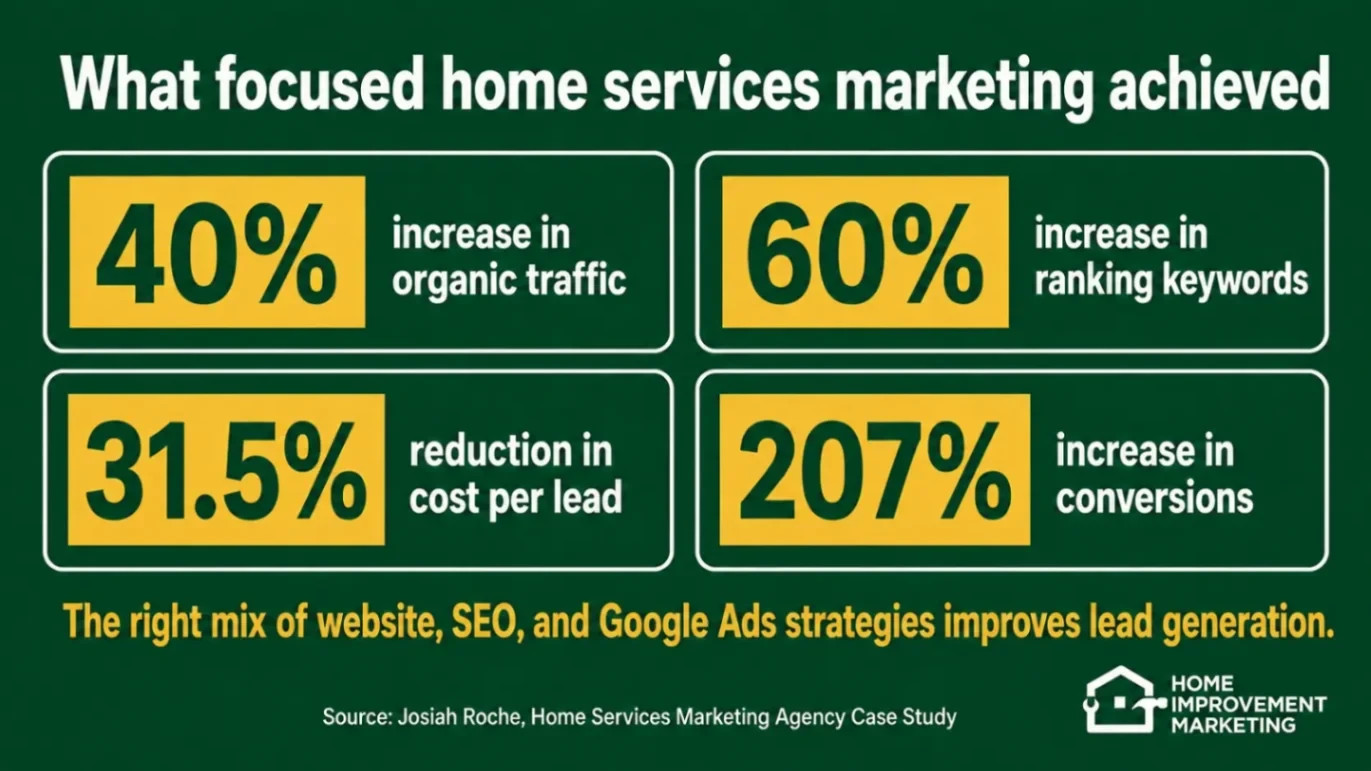
As your lead flow grows, you can test more marketing campaigns and channels. Focus your budget on the places where potential customers are already looking for your services.
If you want to save time, our digital home improvement marketing agency can handle it for you. We'll help you focus your budget where it has the best chance of paying off.
Get in touch with us to learn more about our services.